

“I’d stay forever, but there’s no point in doing that because Phil’s got a big need.”Paul Turner

A few months ago, one of my longest-standing Vistage members told me he was leaving.
Paul Turner had been part of Vistage for thirteen years, seven of them in the group I chair. He loved it. He valued the learning, the conversations and the relationships he had built. He described the group as a safe place and something that had become part of his support mechanism.
So his decision to leave wasn’t born from dissatisfaction.
Quite the opposite.
Paul could see another leader in his business reaching a point where the experience that had helped shape him could now make an enormous difference to someone else.
His colleague Phil was stepping into a bigger role. There would be new challenges to navigate, decisions to make and, inevitably, moments when having a trusted group of people around him would matter.
Paul could have stayed.
In truth, part of him wanted to.
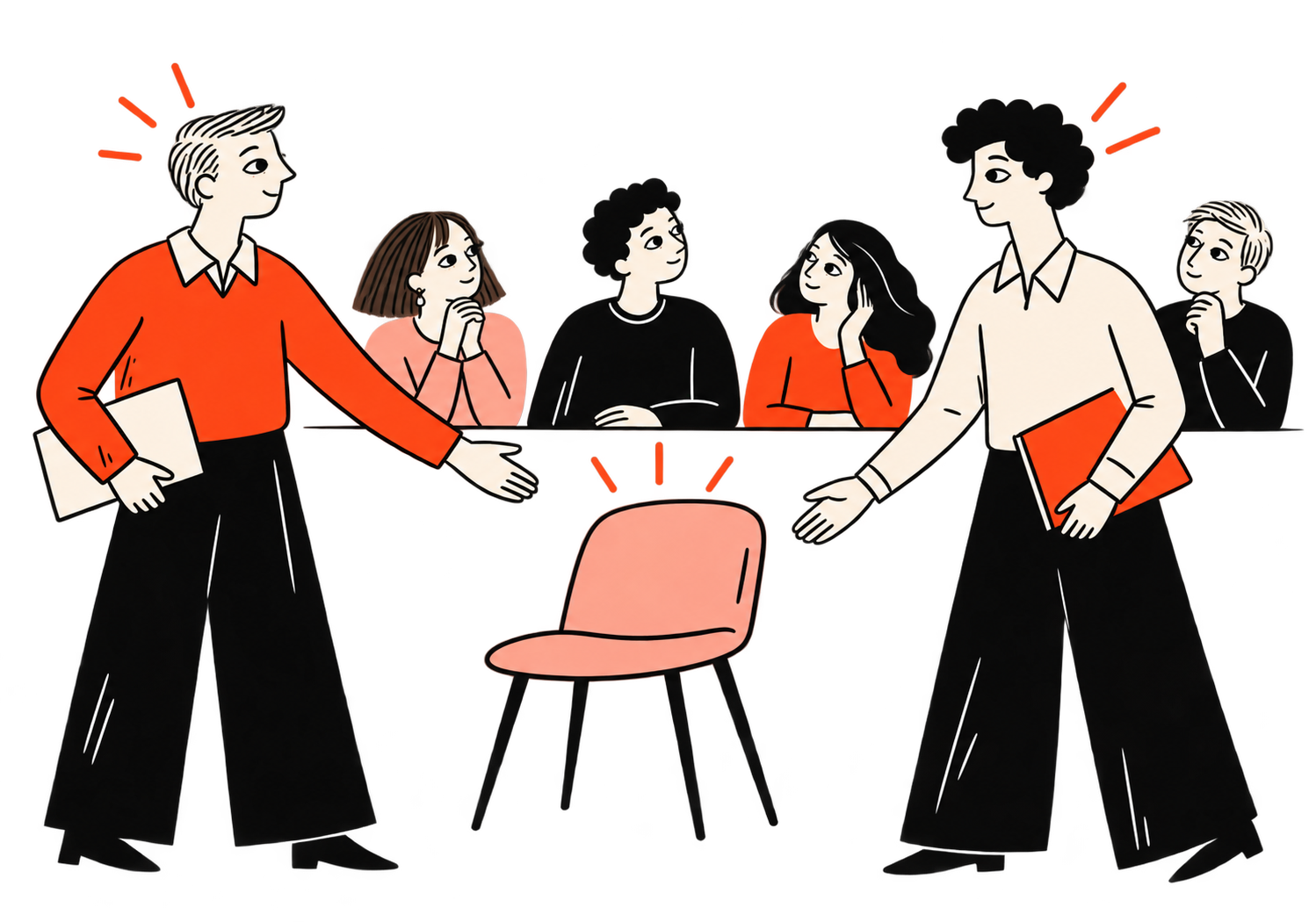
Instead, he chose to make room.
There was something in that conversation that resonated, because it represented a form of leadership we perhaps don’t talk about often enough.
We celebrate leaders for what they build.
Perhaps we should pay more attention to what they leave behind.
What Keeps Us Growing
When Paul first joined Vistage, like most leaders, he came to learn.
Thirteen years later, learning still mattered enormously to him. He talked about the need to remain current, to keep reading, learning and adapting. His belief was simple: you cannot lead for twenty years by continuing to do exactly what you did ten or fifteen years ago.
Yet something else had changed.
Over time, his relationship with the group had moved from simply asking, “What can I get from this?” towards something closer to, “What can I contribute?”
He talked about looking around the room when another member was struggling and wondering whether he could help. Sometimes that meant asking the question nobody else had asked. Sometimes it meant listening. Sometimes it meant offering experience. Sometimes it meant noticing what somebody needed and then filling the gap.
When I asked what he was most proud of after thirteen years, his answer wasn’t an achievement, a promotion or a business result.
It was his contribution.
When Growth Becomes Contribution
There is a stage of human development sometimes described as ‘generativity’: our desire to contribute to something beyond ourselves, helping other people grow and leaving something useful for those who follow.
In leadership, I think we see it when experience stops being something we accumulate and becomes something we circulate.
Knowledge gets shared.
Doors get opened.
People are championed.
Space gets created.
The tree that has grown strong begins to strengthen the forest around it.
Experience Changes What We Have to Give
One of the things I found particularly interesting in my conversation with Paul was his reflection that he isn’t the same person he was when he joined Vistage.
He described the growth as ‘exponential’: not simply in what he knows, but in how he has conversations, processes challenges and views life.
His leadership has become calmer and more coaching-led. He spoke about psychological safety and creating environments where people can ask the questions that matter to them without fear of judgement.
That evolution didn’t happen through one extraordinary conversation.
It happened through years of them.
Years of being challenged. Hearing perspectives different from his own. Helping other leaders process their challenges and, in doing so, seeing his own differently.
Perhaps that is one of the less obvious truths about leadership development.
We rarely notice ourselves changing while it is happening.
Then, one day, we find ourselves responding differently to something that once would have floored us. Asking a better question. Remaining calmer in uncertainty. Giving someone else the space to find an answer rather than rushing in with our own.
The roots have grown deeper without us noticing.
Leadership That Creates More Leadership
There was another reason Paul’s decision struck me.
Succession is often discussed as an organisational process: identifying talent, developing capability, transferring responsibility.
Yet the human act beneath it is much simpler.
At some point, somebody has to be willing to make room.
When leadership becomes too closely tied to status, expertise or being the person everyone needs, creating space for somebody else can feel like losing something.
Stewardship asks a different question:
“What does this person need from me in order to grow?”
For Paul, the answer was unusual.
His seat.
He told me it wouldn’t feel right to continue sitting in the room knowing that Phil could grow and benefit from what he himself had experienced over thirteen years.
Phil’s gain, he believed, would be greater than his own loss.
That, to me, is Leadership in Action.
Paul was adamant that his decision had nothing to do with age or feeling he had outgrown learning. He still had the thirst for it.
This was about recognising that leadership is sometimes expressed through our presence and sometimes through the space we are prepared to create for somebody else.
What Remains When We Move On
Paul described himself as something of a ‘holding player’ within the group.
He would often sit back while others asked their questions, listen carefully, and then, when it seemed everything had been explored, quietly offer another perspective.
I knew exactly what he meant. I have watched him do it countless times.
Yet I’m not sure he entirely appreciated how much those contributions had become woven into the fabric of the group until we talked about them.
Perhaps none of us does.
We tend to associate legacy with something grand that happens at the end of a career.
I think it is being created far earlier than that.
It is in the colleague who thinks differently because of a question you once asked.
The emerging leader who has more confidence because you saw something in them before they quite saw it themselves.
The person who handles a difficult conversation differently because of something they watched you model years ago.
The culture that carries traces of how you behaved long after you have left the room.
Thirteen years of Vistage undoubtedly left something in Paul. He was unequivocal about how profoundly the experience had shaped the leader and person he became.
Yet thirteen years of Paul also left something in Vistage.
In the people he challenged. The people he supported. The laughter and relationships he helped create. The questions he asked. The wisdom he shared.
And now, in the space he has deliberately created for another leader to grow.
The Space We Leave Behind
Perhaps the strongest leaders eventually reach a point where success is measured by more than what happens while they are there.
It is also visible in what continues after they have gone.
That changes the question of legacy.
Rather than asking, “What will I leave behind one day?”, perhaps a more useful question is: “What am I leaving in people now?”
Paul may have given up his seat around one particular table.
I suspect what he has left behind will occupy far more space than the chair ever did.
Perhaps that is the paradox of leadership.
Sometimes making room for someone else is precisely how we leave more of ourselves behind.