

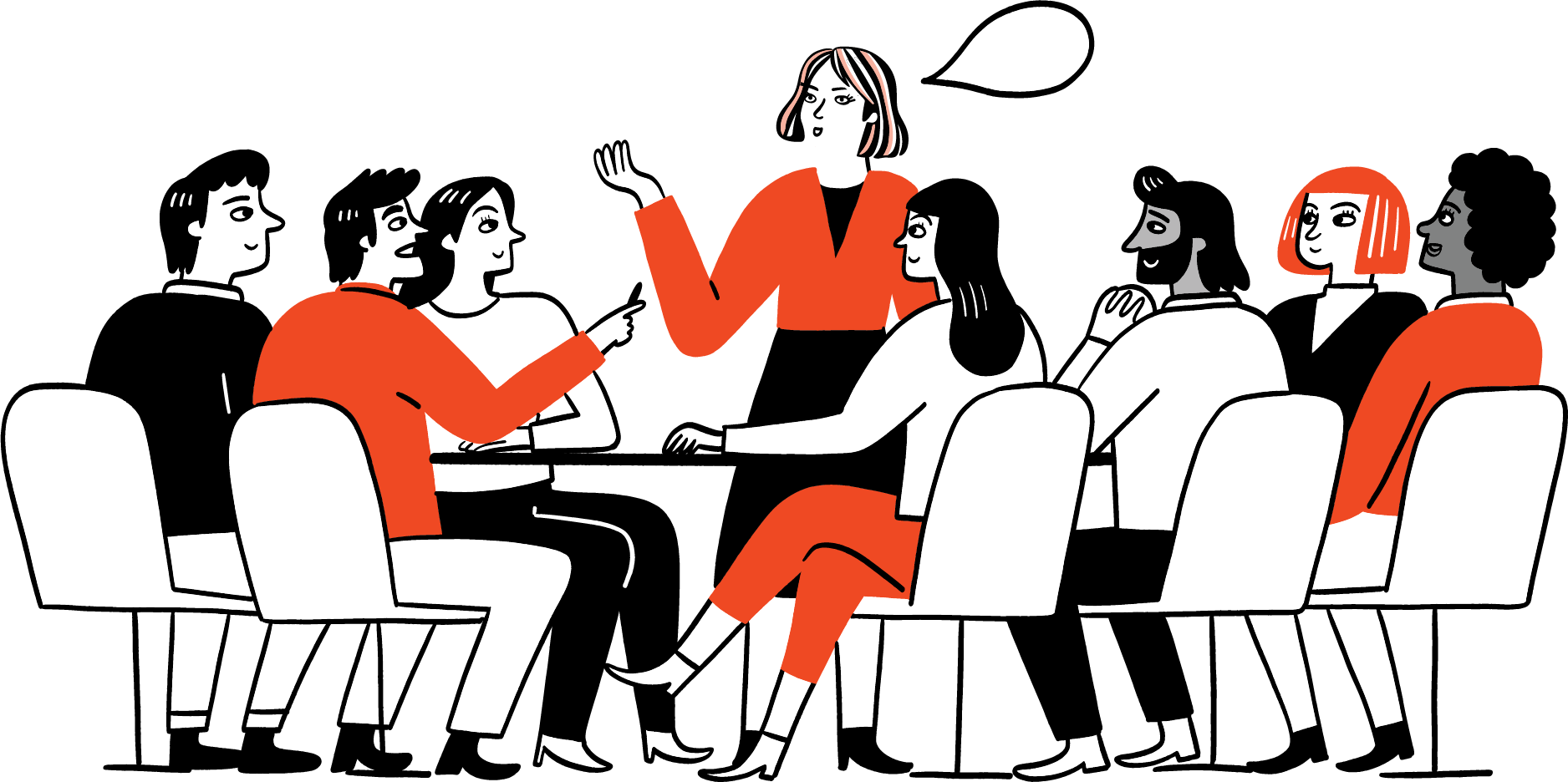
“If it matters to them, they’ll talk about it.”
Seth Godin

In a world that applauds scale, reach and casting nets wide, Godin reminds us: true impact comes when we aim narrow. The ‘smallest viable audience’ isn’t about playing small, it’s about being precise.
This matters for leaders who care about depth over breadth – about building relationships, not just transactions; about creating value, not just volume. Whether you run a traditional business or a coaching group where depth and connection matter, when you focus on the ‘right few’, you create a community that values what you stand for, spreads the word, and sustains your work.
And this month, across all my Vistage groups, we dived straight into that idea – not as marketing theory, but as a leadership lens that reveals something deeper about identity, belonging and ambition.
For me, this concept landed because it mirrors my own business reality. I am fishing in a small pond – intentionally. I’m looking for high performing CEOs and founders who want to do meaningful work, with meaningful people, over meaningful time. That’s not a mass market. It was never meant to be.
What This Means for Modern Leadership
Seth’s message is deceptively simple: focus on the smallest group of people who would truly care about what you do, and design everything for them. If you get it right, those people become your committed core – the ones who talk about you, return to you, and bring others with them.
The leaders who embrace this shift stop chasing universal approval and start building powerful affinity within a tight circle – employees, customers and communities who feel genuinely seen.
Why it Resonates With Me
I’ve built – and continue to build – my Vistage peer advisory groups around a very deliberate, very committed audience: CEOs and founders who value growth just as much as they value fulfilment.
This means I frequently turn people away. Not because they aren’t good leaders, although they’re not ‘my’ leaders. They’re not the ones who want the depth of conversation, challenge, courage and emotional maturity that my groups thrive on.
Focusing on a smallest viable audience is not limiting. It’s liberating.
It gives me permission to go deeper, expect more, and build a community where vulnerability, accountability and ambition can coexist.
And that’s exactly what my members do – they advocate for each other, for the journey, and even for me.
Primal Human Drivers Meet Community
Underneath the theory lies human nature. We don’t just buy products or services, we buy belonging, identity and meaning. Seth Godin captures this well: not everyone wants what you make – some people want to feel seen, understood and part of something.
From a psychological and motivational standpoint, three primal ‘wants’ often surface: belonging (to a community that shares values), significance (to matter, to be seen as a serious leader), and growth (to evolve personally and professionally).
When you build around a smallest viable audience, you tap into those drivers – not superficial needs, but deep-rooted desires to belong, to grow, to matter.
For those reasons, the smallest viable audience is not a limitation, it’s a strategic alignment with what humans are really searching for.
Leadership in the Small Pond: Are You One of the Few?
So let’s get practical. The ‘smallest viable audience’ only works if the audience is truly committed.
That means asking the question every CEO secretly avoids:
Am I actually high performing – or just busy?
In the spirit of Tony Robbins’ infamous “Dear Under-Achiever” emails (I’m sure I’m not the only high achiever who signed up to prove him wrong!), I’ll offer this gentle provocation:
If you believe you belong in a high performing CEO group… show me.
Show yourself.
Show your business.
Show your team.
Because high performance isn’t about bravado – it’s about readiness: readiness to be challenged, readiness to be uncomfortable, readiness to have people hold a mirror up to your leadership.
If you’re still reading, chances are the message ‘has’ resonated. That’s the power of smallest viable audience thinking – it repels the many and attracts the few who matter.
What Leaders Can Do Now
Here are three questions worth sitting with this month:
“Who are the few who matter most?”
Not your total addressable market – the people who truly care.
“How deeply do you serve them today?”
Imagine designing ‘everything’ around them.
“What would change if you stopped seeking universal approval?”
What possibilities open up when you stop trying to appeal to everyone?
Leadership becomes sharper, clearer, braver and far more human.
Closing the Loop
Seth Godin begins with the assertion that attention is scarce. He ends with the reminder that connection is everything, and leadership sits right between the two – choosing to matter deeply to the people who matter most.
He says “Do work that matters for people who care.”
That’s the ‘smallest viable audience’.
And it’s the biggest opportunity you have as a leader.